
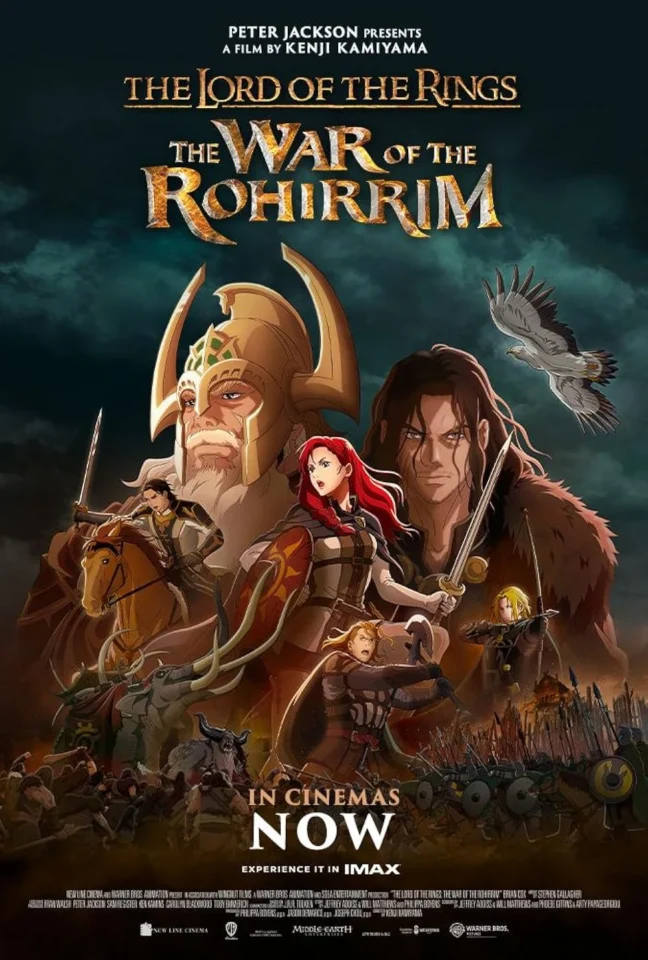
The film “The Lord of the Rings: The Battle of Rohan” stands out for its unique production methods. The team filmed each scene in live-action and used motion capture. Instead of turning this motion into CG, they chose to create hand-drawn animation.
SOLA Entertainment, which handled the animation, is known for mixing American and Japanese styles. Their past works include Batman: The Long Halloween and Catastrophe.

This production made full use of Japanese animators’ skills, blending live-action movement with expressive animation. The motion of animals like horses and eagles looks very natural, and the combat scenes are detailed. With 130,000 frames, the animation is impressive on the big screen.
The background art is also impressive, carefully recreating Middle-earth’s world. The film shows the wide grasslands of Rohan, rugged mountains, and the strong stone walls of Hornburg. The color palette uses muted tones, which match the serious mood of the live-action trilogy.
Kenji Kamiyama’s Experiment in Western Fantasy
Kenji Kamiyama, known for acclaimed sci-fi works, directs his first full-fledged Western fantasy with The Lord of the Rings: The Battle of Rohan.
This ambitious project adapts the “Tale of Helm Hammerhand” from The Lord of the Rings Appendices into a two-hour animated film, set 200 years before the live-action trilogy. The original story is very brief; Tolkien wrote:
Helm had a daughter. She was beautiful, but her name is not recorded. Fregar sought her hand, but Helm refused.
This single sentence became the foundation for a grand epic tale of war, elevated by executive producer Peter Jackson—director of the live-action trilogy—and screenwriter Philippa Boyens, who also worked on the trilogy.
Unfortunately, when it premiered in Japan in 2024, the market was flooded with isekai reincarnation anime, making it difficult to perceive the film’s novelty or freshness as a fantasy work. Popular series like ‘Jobless Reincarnation’, ‘That Time I Got Reincarnated as a Slime’, and ‘The Rising of the Shield Hero’ were being animated one after another, rendering sword-and-sorcery fantasy worlds a familiar sight to viewers.
The film’s attempt to depict Tolkien’s authentic high fantasy using Japanese animation is admirable, yet in 2024, audiences oversaturated by fantasy anime found little novelty. The issue isn’t the film’s technical or creative quality, but its inability to distinguish itself in a crowded genre—highlighting a core challenge for its impact.
Storytelling and Direction That Couldn’t Keep Pace with the Visual Beauty
Many viewers likely felt dissatisfied with several elements of this film, particularly regarding its adherence to the established qualities of The Lord of the Rings and its storytelling depth.
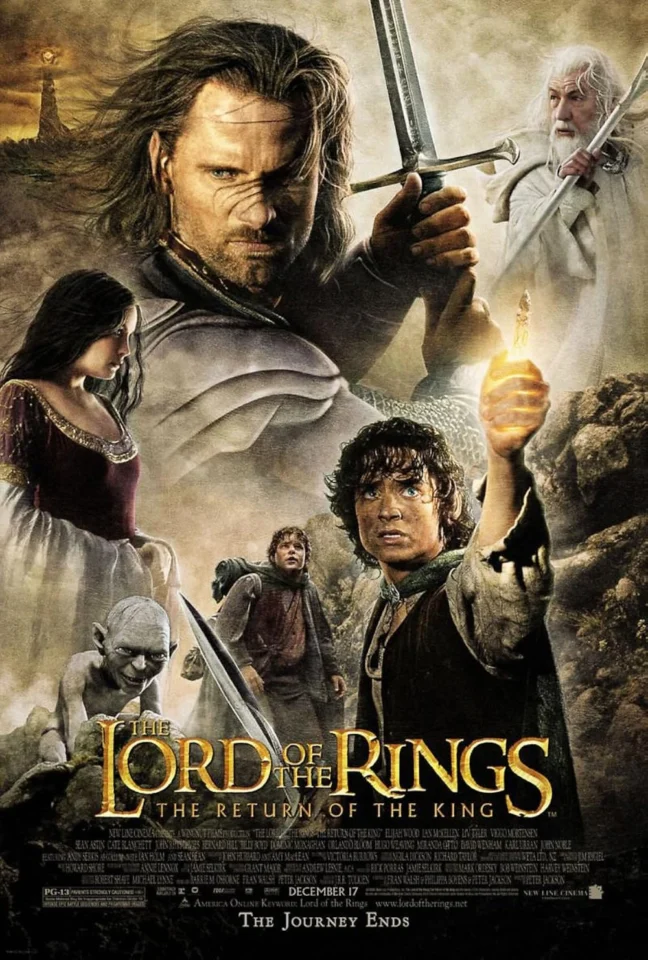
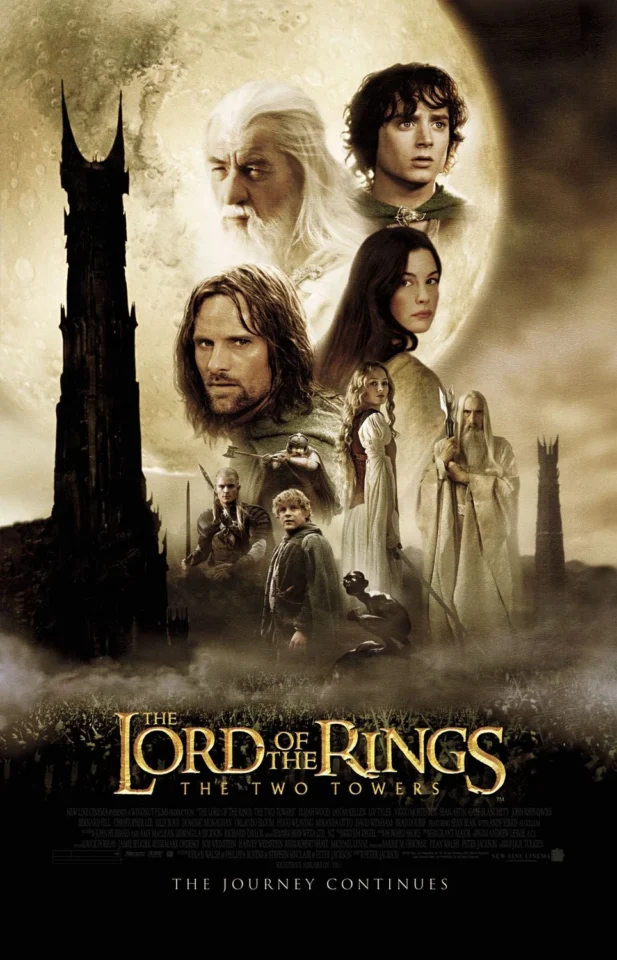
First is the “lack of Lord of the Rings essence.” Elements defining the grand fantasy feel of the live-action trilogy released from 2001 to 2003—such as adventures woven by diverse races like wizards, elves, hobbits, and dwarves—are almost entirely absent here.
The bulk of the story revolves around conflicts between humans, with only a few brief appearances by orcs. Magical elements are virtually absent. Saruman makes a fan-service appearance near the end, but it’s just a fleeting glimpse with almost no impact on the story. The Ring elements feel tacked on. Despite bearing the title “The Lord of the Rings,” it essentially feels like a standalone original work.
As mentioned earlier, the original text contains only a single sentence about King Helm’s daughter: “To one of these councils Freca rode with many men, and he asked the hand of Helm’s daughter for his son Wulf.” The very attempt to expand this brief description into a two-hour film may have been inherently flawed. I felt that viewers going in seeking the “magical elements of Middle-earth” expected by Lord of the Rings fans were likely to be disappointed.
Even more serious is the shallowness of the storytelling. The characters’ thinking felt overly simplistic, and their tendency to try to solve everything with “power” was striking. The story begins with Freca, a leader of immigrants, attempting to arrange his son Wulf’s marriage to Princess Hela. However, Fregar continually behaves disrespectfully toward the king, revealing his ambition. During the ensuing quarrel, King Helm kills Fregar with a single punch.
This “one-punch kill” marks the beginning of the tragedy, but it feels far too abrupt, lacking any consistency in the characters’ motivations. When Wolf attacks with his army, King Helm ignores his subordinates’ advice and insists on fighting head-on. He ends up losing his sons and suffering severe injuries himself, yet his subsequent actions defy all reason. He creates his own “ghost legend” by venturing alone into enemy territory night after night, blowing a horn, and slaying enemy soldiers one after another.
Princess Hera is supposed to be the main character, but she barely stands out for most of the film. Only near the end does she face Wolf alone. Because her character is underdeveloped, the climax lacks the impact it should. Wolf also feels like a minor character, and the story fails to convey the depth of his friendship with Hera or his tragic role as a vengeful figure.
Director Kamiyama’s inventive camerawork is evident, yet there are moments when a more dynamic direction might have strengthened the experience. Some critics believe the film underutilizes fantasy elements—such as magic or mythical beings—and misses opportunities to differentiate itself from both live-action and conventional anime. Viewers wanting animation-specific spectacle may be disappointed by the film’s restrained approach.
Box Office Failure, Potential as an Independent Work, and Hope in the VOD Era
The film cost 4.5 billion yen but earned only about 3.2 billion yen at the box office, leading to a shortened theatrical run in Japan.
However, this raises an important question: What if this film had been produced from the start for streaming platforms like Netflix or Amazon Prime Video, rather than a theatrical release? In today’s VOD era, many viewers prefer the convenience of enjoying works at home without hassle.

In fact, films like this—a prequel to a major franchise or a spin-off—are often successful on streaming platforms. Series like The Mandalorian and The Witcher, which were released exclusively on streaming services, became global hits and received multiple seasons. This film might also have found an audience on streaming, with its reputation growing through word of mouth. Furthermore, if you approach this not as “the latest Lord of the Rings installment” but as “an original anime set in the same shared universe,” it’s certainly an enjoyable work in its own right. The story is a straightforward revenge tale, easily understandable even for those who haven’t seen the trilogy. The character designs struck a nice balance—neither too realistic nor overly cute—leaving a favorable impression. It’s also a welcome touch that the voice actors from the live-action dub participated.
Most of all, when the Rohan theme song plays, it is sure to move fans of the live-action trilogy. It reminded me of Rohan’s heroic scenes in The Two Towers and made me feel nostalgic. This film will definitely split opinions. Some criticize it for “stunning visuals but shallow story” and “characters think too simplistically.” Others say, “I enjoyed it more than expected,” and “The background art was beautiful.”
Summary: The Challenges and Potential Left by an Ambitious Experiment
The animated film The Lord of the Rings: The Battle of Rohan was ambitious, with impressive visuals and new production techniques, but its biggest flaw was shallow storytelling.
The story felt thin, stretched from a single sentence in the source material to fill two hours. The characters thought in simple ways; the main character, Hera, did not stand out, and most importantly, the film did not capture the essence of “The Lord of the Rings.”
This film tried to adapt a Western fantasy classic into Japanese animation, but the result was not very successful. Still, I think the effort was worthwhile. I hope the next attempt will better balance visual beauty and storytelling.